Ancient Taraz Settlement
The historical part of Taraz city, the citadel, lies beneath the modern central bazaar. This is where the residence of the city rulers was located. Adjacent to the citadel was the part of the city called "shahristan", surrounded by walls, where the houses of the nobility, wealthy merchants, craftsmen, as well as the eastern bazaar and mosque were located. Adjacent to the shahristan walls were the workshops and houses of craftsmen — rabad.
Archaeological Discoveries
As a result of archaeological excavations on the territory of ancient Taraz, ceramic water pipes, public baths, a copper-bronze coin casting site, stone-paved streets, and other structures were found. The thickness of the wall surrounding the city was 1.25 m, and the height was 9-10 m.
Currently, traces of the eastern wall of Shahristan have been preserved (on the Mirzoyan Street side).
Karakhanid Empire
In the middle of the 10th century, the Karakhanid Empire was created — one of the largest states of that time, which included the city of Taraz. It existed until the end of the 12th century. The flourishing of Taraz coincides with the period of the Karakhanid state.
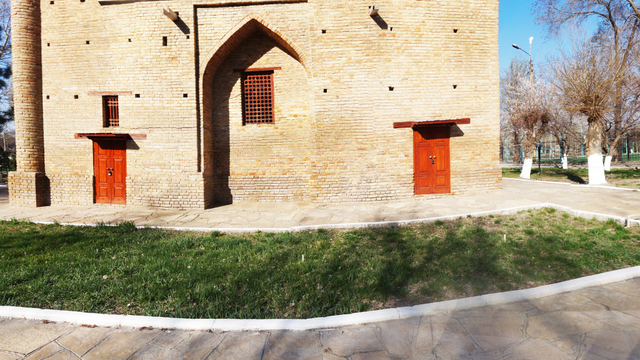
Favorable conditions were created for the development of architectural art. Two baths from the 10th-12th centuries found on the territory of the central market testify to the high level of culture of that time.
Stone Bridge
Researchers also attribute the construction of a stone bridge over the Talas River to this era. This was a bridge used by caravans, merchants, travelers, and residents of Taraz on the Great Silk Road. The Arab traveler al-Maqdisi first wrote about the bridge in the 10th century, and the Laotian monk Chang Chun in the 12th century.
Ancient Taraz Museum and Archaeological Park
In the central part of the modern city, the remains of the ancient Taraz settlement have been preserved. The first archaeological research began in the 1930s, and scientists then considered the question of creating an archaeological park.
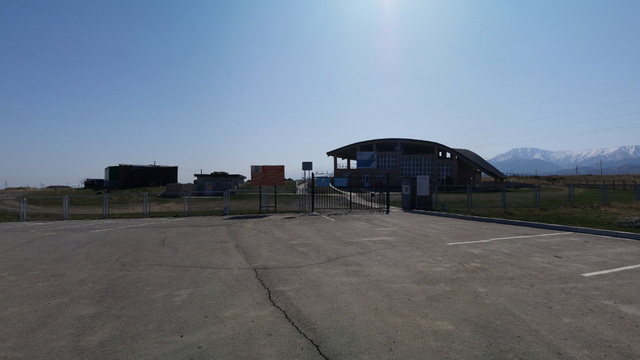
In 2011, large-scale archaeological excavations began on the territory of the Taraz shahristan with plans to create the "Ancient Taraz" historical and cultural complex, the "Ancient Taraz" museum, and an open-air archaeological park.
The "Ancient Taraz" Museum was solemnly opened on October 8, 2015, on the eve of the 550th anniversary of the Kazakh Khanate, with the participation of Elbasy N.A. Nazarbayev.
Archaeological Park
The total area of the Taraz settlement is 10 hectares. Archaeological and restoration work is systematically carried out on the territory of the archaeological park. To date, urban development of the 10th-12th centuries from the Karakhanid era has been discovered here: a main street, public and residential buildings: a bathhouse-hammam, two caravanserais, residential and commercial buildings, and a water supply system.
In 2011-2016, canopies were erected over the archaeological excavations to protect them from atmospheric precipitation. Excursion pedestrian bridges have been installed over the medieval archaeological structures in the archaeological park area.