Ежелгі Тараз

Archaeology

Pages

THE PLACE OF SETTLEMENT OF PRIMITIVE MAN AKKOL (LOWER PALEOLITHIC)

THE PLACE OF SETTLEMENT OF PRIMITIVE MAN AKKOL (LOWER PALEOLITHIC)

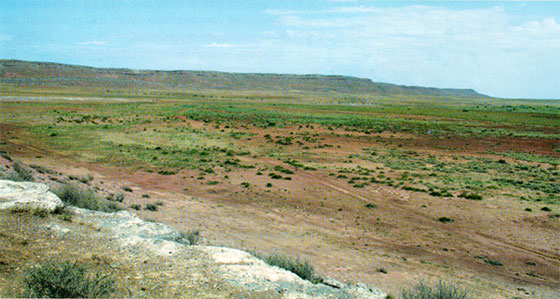
One of the first stages of the Lower Paleolithic is the Acheulean era. During the Acheulean era, a person begins to gradually get used to social life in the community. One of the monuments of this period is the Akkol settlement , which is located 11 km south-west of the village of Akkol, south of Lake Akkol, Talas district. The monument was opened in 1961 by archaeologist H.A. Alpysbaev. In 2009, it was examined by the expedition of the Arch of Archaeological Expertise under the supervision of

Learn more
BURYING GROUND OF BERKKARA (II century BC-IV century AD)

BURYING GROUND OF BERKKARA (II century BC-IV century AD)

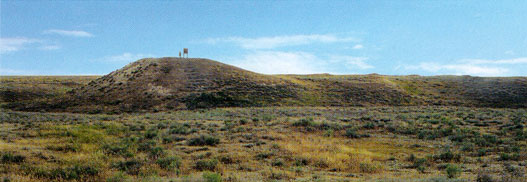
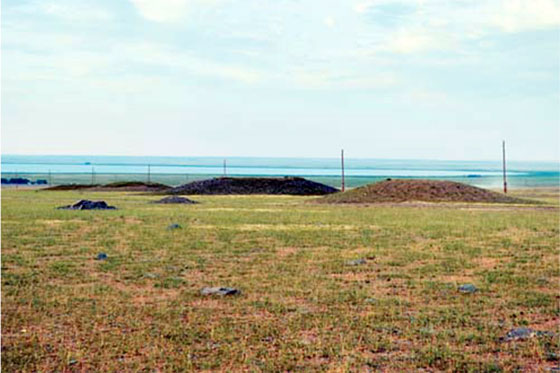
The burial mound is located on the foothill plain at the foot of the Northern slopes of the Karatau ridge (Zhualy district) on both banks of the Berikkar river. The mounds are located from the gorge to the coastal strip of lake Bilikol. The monument was identified and recorded in 1938-1939 by an archaeological expedition led by A. N. Bernshtam. In 1957 he was studied by the South Kazakhstan archaeological expedition led by A. G. Maksimova, in 1978-by the expedition of the Dzhambul regional Muse

Learn more
THE PLACE OF SETTLEMENT OF PRIMITIVE MAN BORYKAZGAN (LOWER PALEOLITHIC)

THE PLACE OF SETTLEMENT OF PRIMITIVE MAN BORYKAZGAN (LOWER PALEOLITHIC)

Paleolithic - ancient stone age. This is the oldest era in the formation of man, his thinking, production activities and culture. The first human footprints on the territory of Kazakhstan belong to the Early Paleolithic (approximately 800-140 thousand years ago). Traces of human settlement on the territory of Kazakhstan belong to the Lower Paleolithic, as evidenced by the tools of the shell-Achelian time - found in the tracts Shabakty, Tanirkazgan, Borykazgan, Akkol, Kazangap (South Kazakhstan -

Learn more
THE ANCIENT SETTLEMENT OF ZHALPAKTOBE (GIKIL) VI-XII centuries

THE ANCIENT SETTLEMENT OF ZHALPAKTOBE (GIKIL) VI-XII centuries

The settlement of Zhalpaktobe is located in the village of Zhalpaktobe of Zhambyl district, located in the suburb of Taraz. According to A. N. Bernshtam, the settlement of Jikil got its name from the name of the Turkic tribe of Gikil. According to G. I. Patsevich, the settlement of Jalpaktobe can be identified with the city of Jigil, which was reported by the Arab geographer of the X century al-Maqdisi. He describes it as a «small village» at a distance of a human voice from Taraz. Opinion about

Learn more
Lower Barskhan – a neighbouring town of Taraz (6th-12th centuries)

Lower Barskhan – a neighbouring town of Taraz (6th-12th centuries)

The ancient settlement of Lower Barskhan is situated in the Baizan region, 1.5km from Taraz. The town is mentioned in Arab written sources of the 10th century attributed to Kudam-ibn-Dzhafar and Makdisi. Makdisi wrote, ‘Barskhan is a town situated the distance of two human voices east of Taraz, surrounded by a wall which has already collapsed. There is a mosque in the market.’ The settlement is two-tiered and rectangular in plan, 310 x 140m in size and 10m high. The citadel and shakhristan are e

Learn more
THE SETTLEMENT OKHUM  VI-XII centuries

THE SETTLEMENT OKHUM VI-XII centuries

The settlement Okhum  is located in Bayzak district, 300 m to the West from highway Sambek-Bostandyk. The settlement was first surveyed in 1894 by V. V. Barthold, in 1936-38 it was surveyed by the Semirechensk archaeological expedition under the leadership of A. N. Bernshtam. In 1983 it was surveyed by the archaeological detachment of KazGU under the leadership of M. E. Eleuov, a schematic plan was removed, sections of shafts were made, lifting ceramic material was collected.  In 1986 and 2000,

Learn more
The Settlement of Taraz (1st – 18th centuries)

The Settlement of Taraz (1st – 18th centuries)

Remains of the oldest part of the ancient settlement of Taraz were discovered buried under the site of modern-day Taraz’s central market. Firstly, the citadel, where those of high and influential rank resided: the rulers and spiritual leaders. Attached to the citadel was a walled part of the city known as the shakhristan, where noblemen, wealthy merchants and craftsmen resided and the eastern market and mosques were situated. The trade and craft outskirts of the city, the rabads, were linked to

Learn more
THE PLACE OF SETTLEMENT OF PRIMITIVE MAN TANIRKAZGAN (lower paleolithic)

THE PLACE OF SETTLEMENT OF PRIMITIVE MAN TANIRKAZGAN (lower paleolithic)

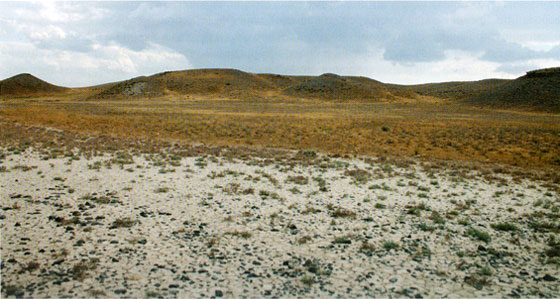
The Tanirkazgan site is located 13.4 km southeast of the village of Kyzylaut, in the tract Tanirkazgan in the Talas district. Paleolithic stone products discovered by archaeologist H.A. Alpysbaev in 1968 on a flat hill composed of sandstone. In 2000, re-examined by the South Kazakhstan Integrated Archaeological Expedition of the Institute of Archeology named after OH. Margulan of the Academy of Sciences of the Republic of Kazakhstan under the leadership of K.M. Baipakov. The parking area is not

Learn more
THE SETTLEMENT TUIMEKENT VI-XII centuries

THE SETTLEMENT TUIMEKENT VI-XII centuries

The settlement Tumescent is located on the southeastern outskirts of the village Toymaker, on the right Bank of the river Talas, Baizak district. In 1894 the settlement was inspected by V. V. Barthold, in 1936-38 it was surveyed by the Semirechensk archaeological expedition under the leadership of A. N. Bernshtam. In 1986, a detachment of the archaeological expedition of the Arch of historical and cultural monuments under the leadership Of K. M. Baypakov worked at the settlement. During the arc

Learn more
The ancient settlement of Mеrkе (7th-13th century)

The ancient settlement of Mеrkе (7th-13th century)

Situated in Zhambyl Province in the Merken region on the western outskirts of the village of Merke, the ancient settlement of Mirki is one of the few in Zhetysu to have kept its medieval name. Mirki was renowned from the beginning of the 8th century. From the 9th to 10th centuries it is mentioned in the travel journals of Kudamy and ibn Khordadbek, who termed it a large settlement. The Arab geographer al-Makdisi noted in more detail that ‘Mirki is a town of medium size, fortified, with a citadel

Learn more