Ежелгі Тараз

Архитектуралық ескерткіштер

Pages

Aisha-bibi Mausoleum

Aisha-bibi Mausoleum

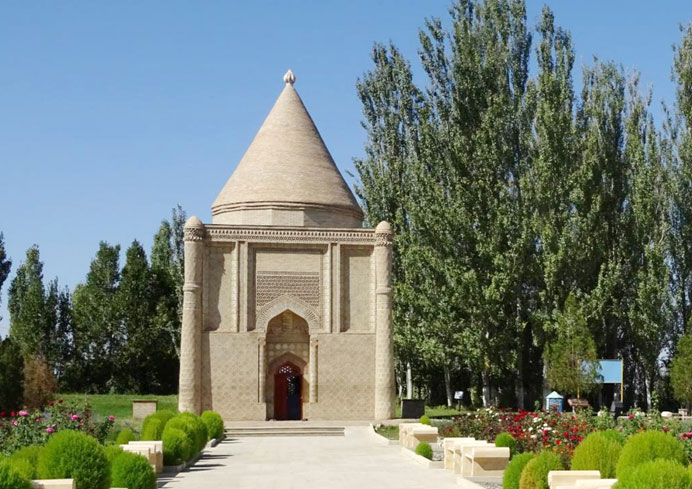
Utterly unique is the 11th to 12th century Aisha-bibi Mausoleum, found in the village of the same name in Zhambyl Province, 17km from Taraz. Every visitor to the region should be compelled to visit this masterpiece of medieval architecture, a ‘holy place’ revered in the Muslim world. Only one original wall from the west facade and small fragments from other parts of the mausoleum were preserved over the many centuries since its construction. The revival of the monument was discussed at length by

Learn more
Babadja-khatun

Babadja-khatun

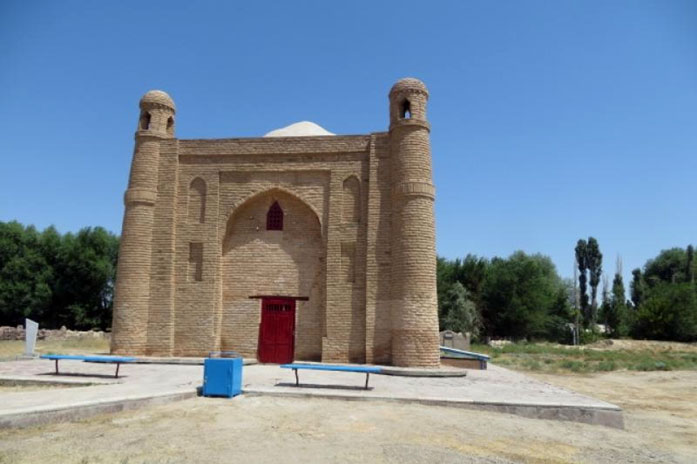
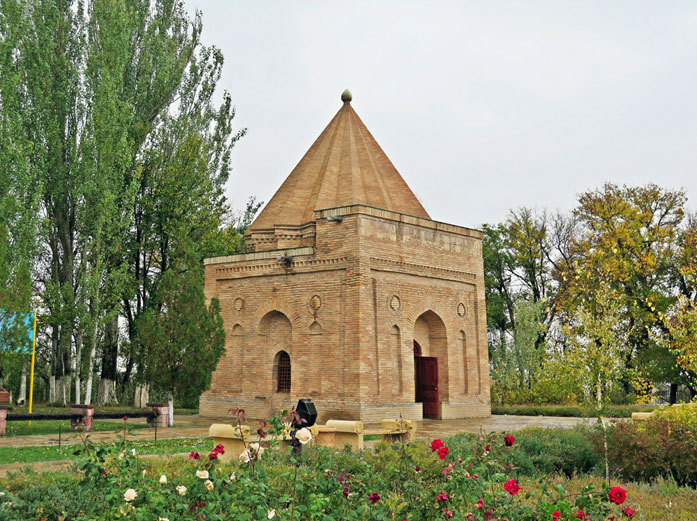
Its neighbouring mausoleum is that of Babadja-khatun (11th century). It is simple in structure and composition, constructed from baked bricks. No decoration is featured on the walls, though architectural details are accentuated in places in an uncomplicated manner. A cone-shaped dome with sixteen facets, set on a prism-shaped base, lends harmony and symmetry to the mausoleum. Its main facade bears the remainder of an Arabic-lettered inscription: ‘This grand tomb is named Babadja-khatun. Its buil

Learn more
Karakhan Mausoleum

Karakhan Mausoleum

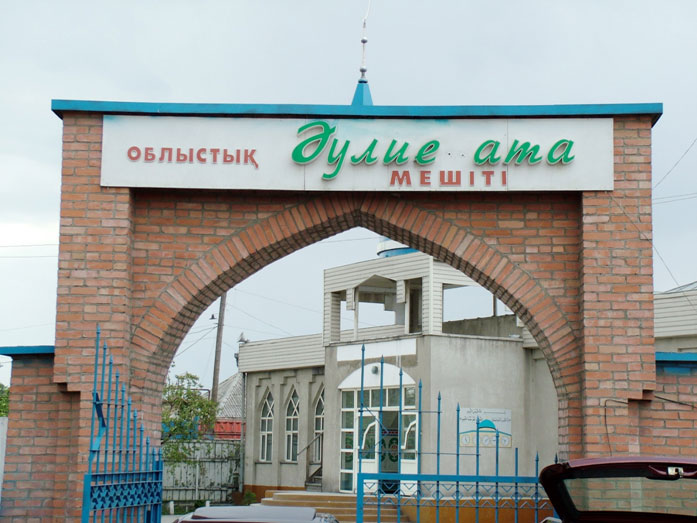
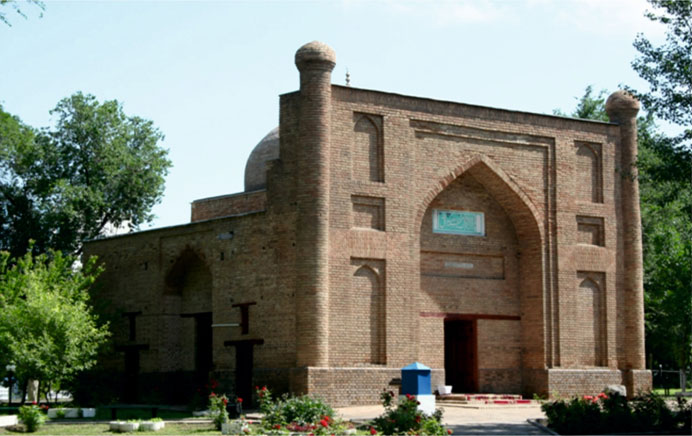
The Karakhan Mausoleum (11th-12th century), also known as ‘Aulie-ata’ (‘sacred father’), is situated in the central part of Taraz (on the intersection of Tole bi and Baizak batyr Street), and was part of the religious memorial complex which took shape on the territory of the medieval rabad. It is thought to have been built on the grave of one of the representatives of the Karakhanid dynasty – Shakh Mahmud Karakhan. Unfortunately, the names of the mausoleum’s builders have been lost over the cent

Learn more
Dautbek Mausoleum

Dautbek Mausoleum

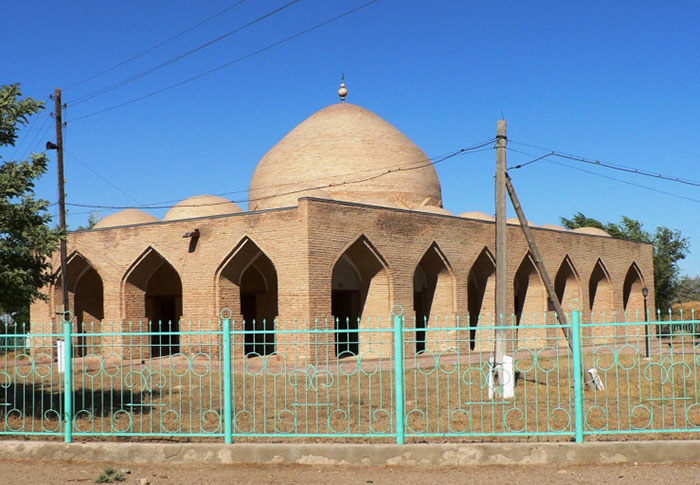
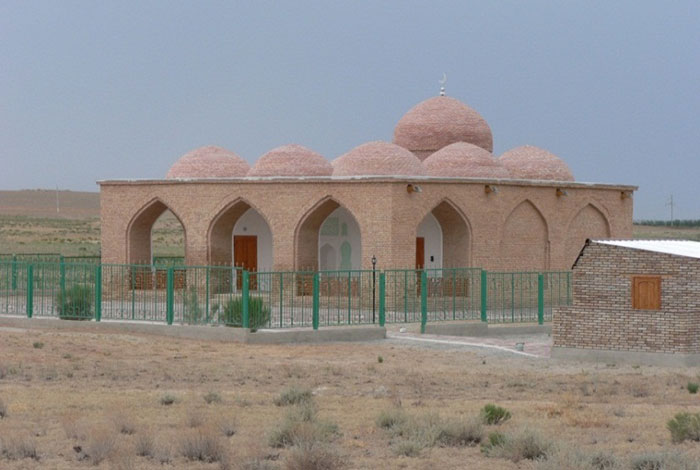
Of the monuments dating from subsequent centuries, linked with the gradual decline of Taraz under the onslaught of numerous enemies, the Dautbek Mausoleum (13th century) has been preserved to this day. The full name of the buried was Ulug-Bilge Ikbal-khan Dautbek Shamansur. The mausoleum originally resembled a marquee – four semicircular arches supporting a dome. The arches rested on a crushed stone foundation. The mausoleum acquired its modern-day appearance at the end of the 19th century, wh

Learn more
Tekturmas Mausoleum

Tekturmas Mausoleum

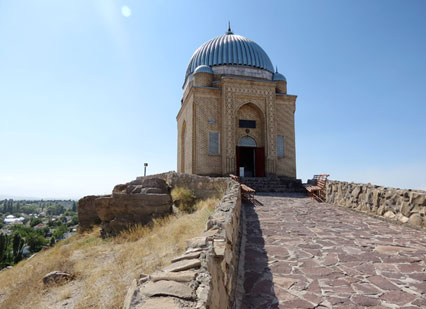
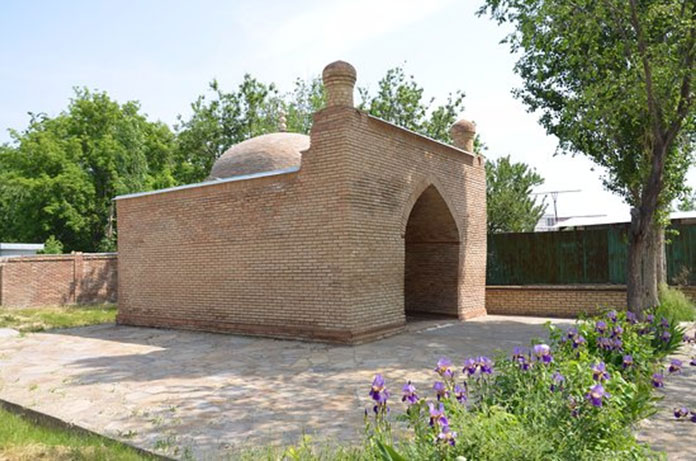
The Tekturmas Mausoleum was built in the 14th century on the right bank of the River Talas. Zoroastrian (a religion founded by the Persian prophet ‘Zoroaster’ in the late 7th or early 6th centuries BC), Muslim and Christian cemeteries can all be found on top of the hills here, while an ancient underground passage can be found at the base of the hills; a stone bridge could be found across the River Talas at one point but only a few fragments of this remain. In the 1930s, many historical and cultu

Learn more
Masolei Shokay Datka XVIII century

Masolei Shokay Datka XVIII century

The Shokai Datka Mausoleum is located in the Sarysu district on the eastern outskirts of the village of Saudakent, in the old cemetery - the former necropolis of the medieval city of Saudakent. The mausoleum is a characteristic type of monumental religious buildings that has developed in the Shu-Talas region. The mausoleum was examined in 1946 by G.I. Patsevich, in 1970-1980 - specialists of the expedition of the Ministry of Culture of the Kazakh SSR and Kazproektrestavatsiya. In 2000, it was e

Learn more