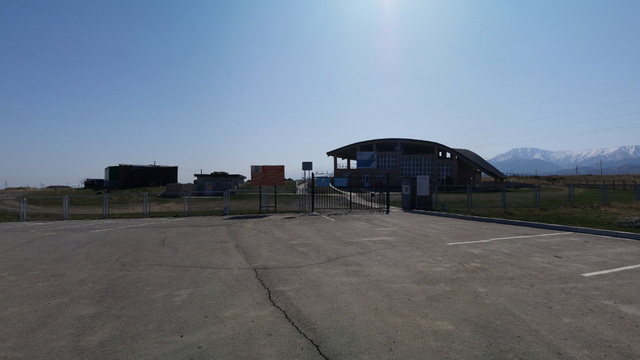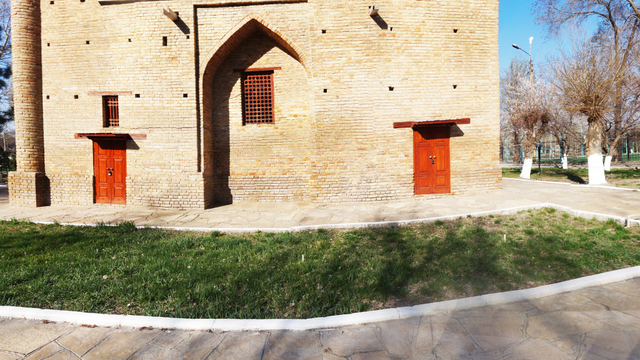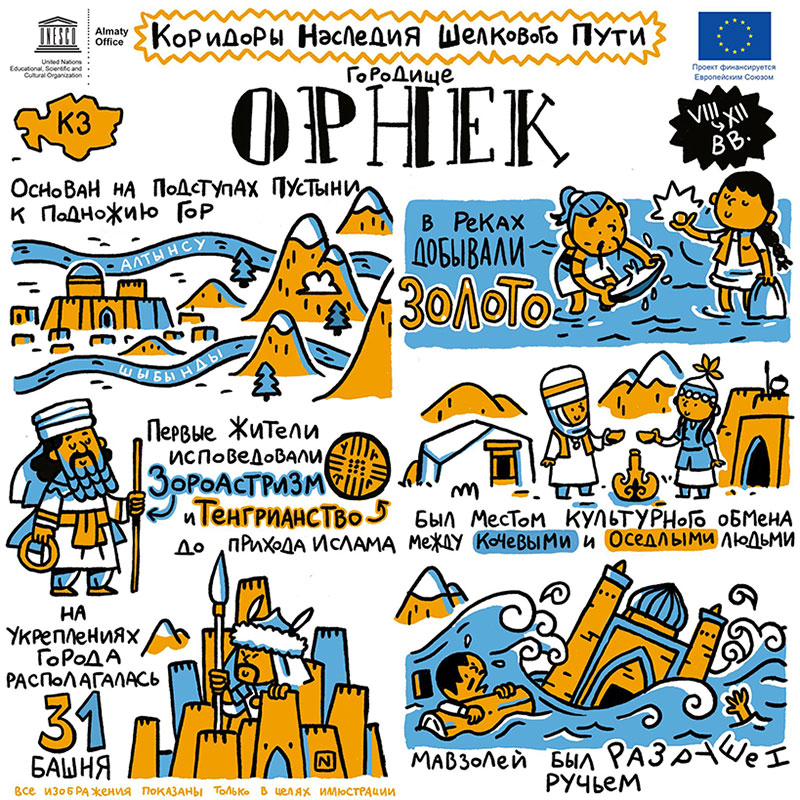
The Ornek Settlement (8th-12th centuries). As a trading settlement, Ornek grew into a thriving city owing to its advantageous geographical location. It was founded on the edge of the desert at the foothills of the Kyrgyz Alatau mountains, on the banks of the Altynsu and Shybyndy rivers. Gold was extracted from these rivers, bringing even greater wealth to the city situated on a strategically important section of the Chang'an-Tianshan Corridor of the Silk Roads.
The Ornek Settlement was founded in the 8th century and was known under the name Kulshub. Kulshub was the principal Turkic city on the Silk Roads and later evolved into a place of cultural exchange between nomads and agriculturalists. The early inhabitants of Kulshub practised Zoroastrianism and Tengrism, but by the 9th-10th centuries Islam had already become the dominant religion in the city, as evidenced by the discovered remains of a mosque and a Muslim mausoleum.
During excavations of two layers, archaeologists uncovered two structures from different periods. In the upper layer, the remains of a mausoleum destroyed by a stream were found. Beneath the mausoleum lay a ruined pottery workshop. Here, archaeologists discovered an assemblage of ceramics that had never been fired. The excavation of the workshop yielded clay vessels: storage jars (khums), cauldrons, jugs, mugs, and bowls.
In 2014, the Ornek Settlement was inscribed on the UNESCO World Heritage List as a component of the serial nomination "Silk Roads: the Routes Network of Chang'an-Tianshan Corridor," jointly submitted by China, Kazakhstan, and Kyrgyzstan.
The corridor represents a 5,000-kilometre section of the Silk Roads. It took shape between the 2nd century BCE and the 1st century CE and remained in use until the 16th century, linking civilisations and facilitating exchange in the fields of trade, religion, science, technological innovation, culture, and the arts.
Illustrations were prepared within the framework of the project "Silk Roads Heritage Corridors in Afghanistan, Central Asia and Iran -- International Dimensions of the European Year of Cultural Heritage," implemented by UNESCO with the financial support of the European Union.
The illustrations are the responsibility of the author and do not reflect the views of the European Union.
Author - Nicolas Journoud
European Union in Kazakhstan
#UNESCOSilkRoadsEU #EUinKZ #EUinKazakhstan