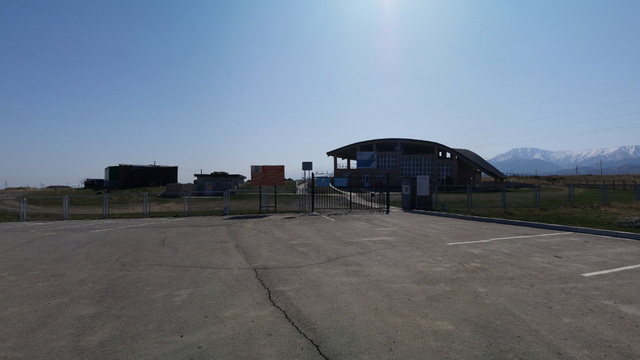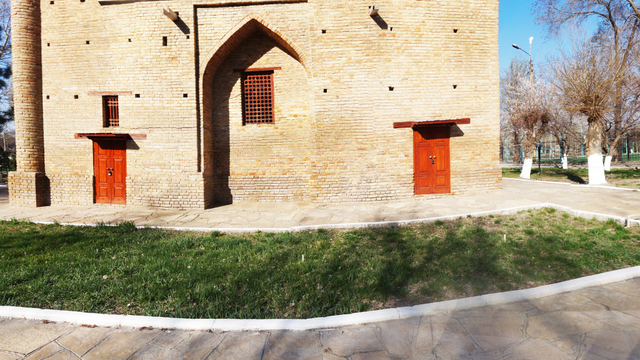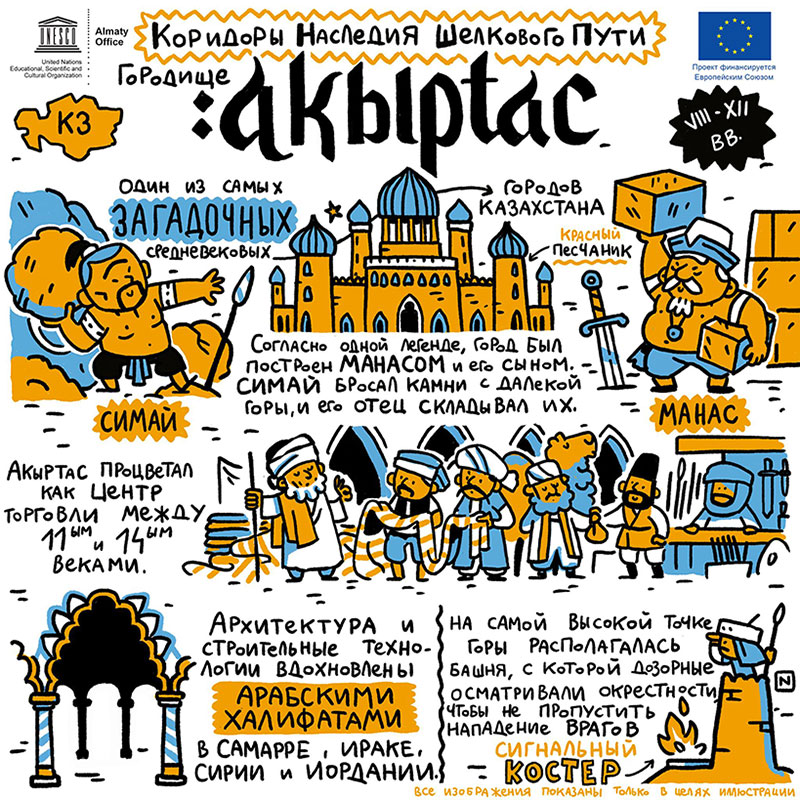
The Akyrtas Settlement (8th-12th centuries) is one of the most enigmatic medieval structures in Kazakhstan, whose architecture resembles that of the residences of Arab caliphs in Samarra, Iraq, Syria, and Jordan. This was evidently a result of close trade and cultural ties with the Arab Caliphate. The fact that Arab construction techniques were employed at Akyrtas demonstrates how knowledge and technologies spread along the Great Silk Road during the medieval period.
According to one hypothesis, the Akyrtas complex is the medieval settlement of Kasribas. The complex comprises several structures built at different times: the Akyrtas Palace, residential estates, the ruler's castle, a fortress, a caravanserai, a watchtower, water reservoirs (khauz), a park, quarries for stone and clay extraction. It also includes Saka burial mounds (kurgans) and the remains of an ancient irrigation system.
Archaeologists have discovered evidence of a Turkic presence on the territory of the complex as early as the 8th-9th centuries, when it served as the residence of Karluk rulers. Nevertheless, the flourishing of Akyrtas as a trading post occurred between the 11th and 14th centuries.
In 2014, the Akyrtas Settlement was inscribed on the UNESCO World Heritage List as a component of the serial nomination "Silk Roads: the Routes Network of Chang'an-Tianshan Corridor," jointly submitted by China, Kazakhstan, and Kyrgyzstan.
The corridor represents a 5,000-kilometre section of the Silk Roads. It took shape between the 2nd century BCE and the 1st century CE and remained in use until the 16th century, linking civilisations and facilitating exchange in the fields of trade, religion, science, technological innovation, culture, and the arts.
Illustrations were prepared within the framework of the project "Silk Roads Heritage Corridors in Afghanistan, Central Asia and Iran -- International Dimensions of the European Year of Cultural Heritage," implemented by UNESCO with the financial support of the European Union.
The illustrations are the responsibility of the author and do not reflect the views of the European Union.
Author - Nicolas Journoud
European Union in Kazakhstan
#UNESCOSilkRoadsEU #EUinKZ #EUinKazakhstan