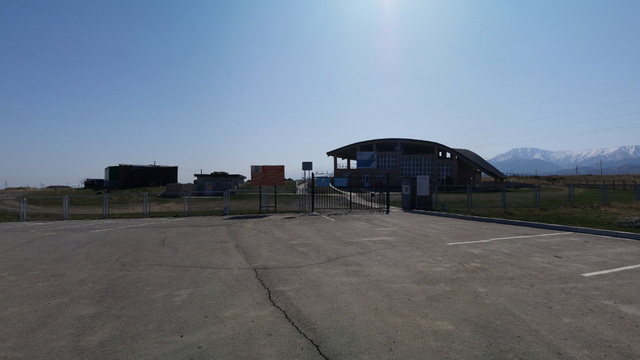
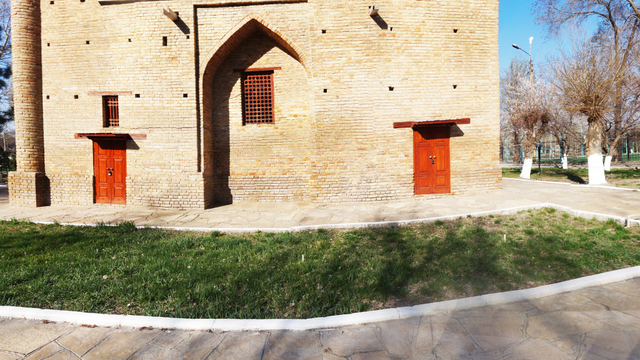
Aktobe Settlement, VI–XIII centuries
The Aktobe Settlement is a major medieval economic, political, and cultural center on the Great Silk Road. The Arab geographer al-Maqdisi (10th century) wrote about the city: "Balasagun is a city with a large population and abundant water." Distinguished figures such as Y. Balasaguni, M. Kashgari, and others lived and worked in the city. As a result of many years of research, Kazakh archaeologists U. Kh. Shalekenov and M. E. Eleuov recognized the region — which had been one of the largest cultural, scientific, and spiritual centers on the Eurasian continent — as the capital of the western part of the medieval Karakhanid Empire.
Since 1974, archaeological excavations have uncovered and studied numerous structures: a palace complex with an eastern bathhouse equipped with a water supply system and a courtyard, residential and utility buildings, a rabat (suburb) of the 6th–12th centuries, a rectangular fortress (tortkul) of the 6th–12th centuries, a defensive structure, wineries, and craft workshops.
Status: archaeological monument of republican significance. Since 2014, Aktobe has been inscribed on the UNESCO World Heritage List as part of the "Silk Roads: the Routes Network of Chang'an-Tianshan Corridor." Since 2017, it has been included in the list of regional sacred sites under the "Geography of Sacred Places of Kazakhstan" project of the "Rukhani Zhangyru" program.