

Auliebastau settlement and spring

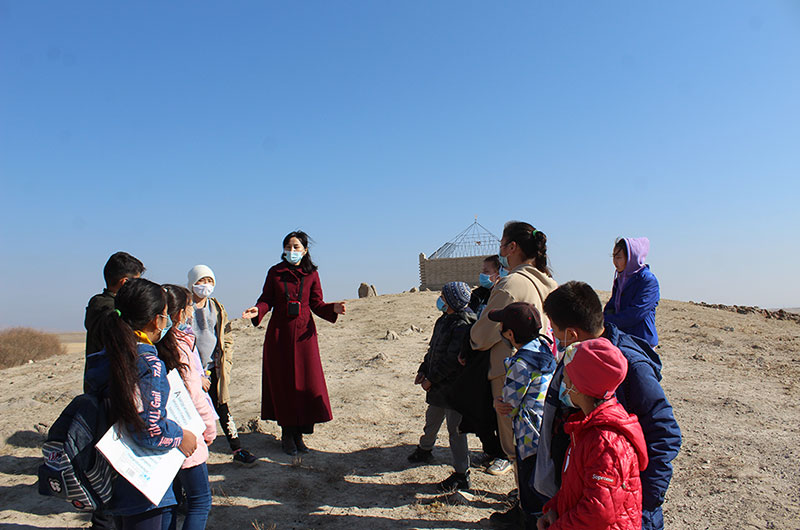
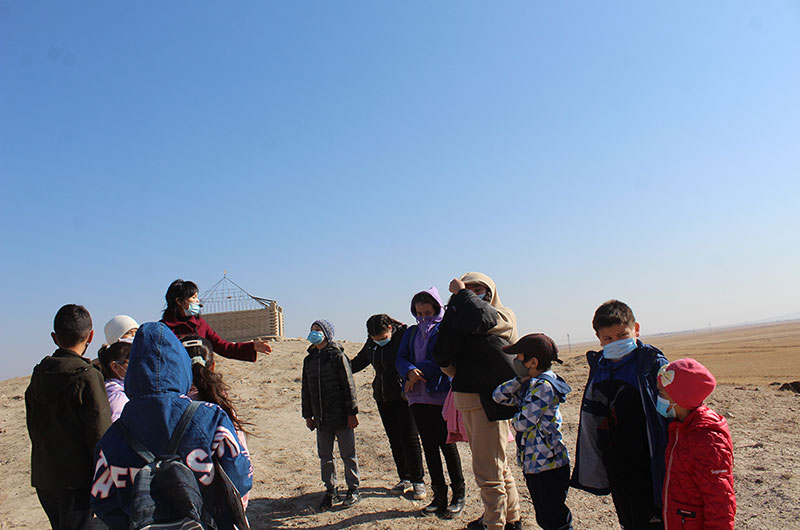
On November 4, 2020, the Historical and Cultural Museum-Reserve "Monuments of Ancient Taraz" held a lesson on the topic "The Settlement and Spring of Auliebastau" within the framework of the "Know and Love Your Region" club, operating under a long-term memorandum with the "Children and Youth Center". The children showed great interest and listened with enthusiasm.
Numerous ancient settlements are found throughout the territory of Zhambyl region. Among them, the settlement and spring of Auliebastau near the village of Aisha-Bibi in the Zhambyl district has been included in the regional alternative list of the "Sacred Geography of Kazakhstan" project of the "Bolashakka Bagdar: Rukhani Zhangyru" program. The site history dates back to the early Islamic period.
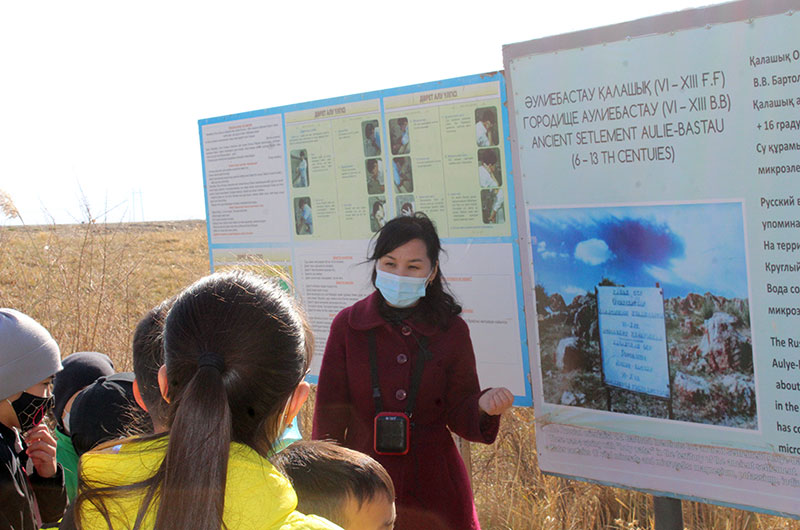
The settlement and spring of Auliebastau are located 13 kilometers from the village of Aisha-Bibi in the Zhambyl district. The settlement history dates approximately to the 6th-13th centuries. Scientists have been conducting research at this settlement since the 19th century. One of the first researchers was V.V. Bartold, who came on a working trip to Central Asia. In 1939, the site was studied by an expedition of the Kazakh branch of the USSR Academy of Sciences and MHTI, and in 1978 by an expedition of the Zhambyl Regional Historical Museum. The convenient geographical location of the Auliebastau settlement testifies that it was one of the important cities on the Great Silk Road. The settlement was founded as one of the politically and economically significant cities of the Western Turkic Khaganate. As a result of political conflicts, the Auliebastau settlement experienced many events in its history, sometimes declining and sometimes returning to the path of development. Essentially, the Auliebastau settlement entered history as a city of states created by Turkic tribes.
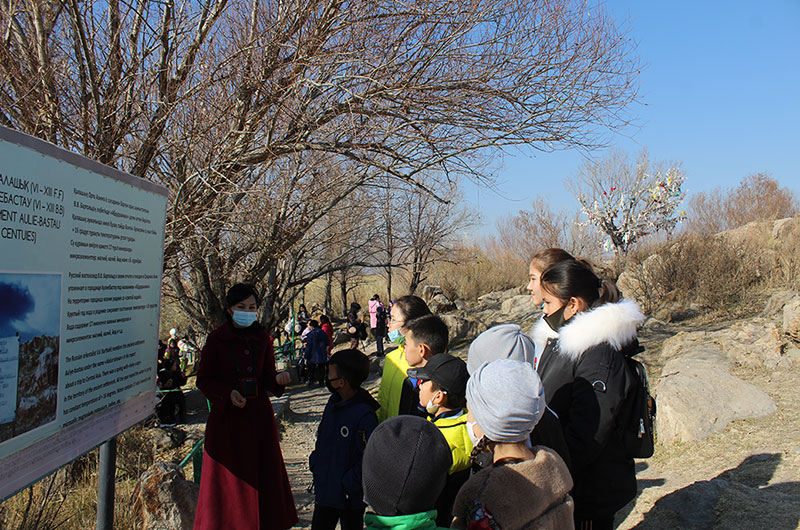
The current site consists of western and eastern parts of ruins. The western part is preserved as a mound platform measuring 85x87 m, the eastern one measuring 100x130 m with a height of 9 m. On the surface and around the hills, fragments of unglazed clay vessels — khums and jugs — are found. A spring flows from under a rock on the southwestern side of the settlement. The spring water has formed a small pond at the base of the settlement. A unique feature of its water is that it flows at a constant temperature all twelve months of the year. Additionally, the chemical composition of the spring water is rich in minerals and microelements and is healing for many ailments. Interestingly, if silver items are immersed in the water of this holy spring, they emerge gleaming and purified after some time. Therefore, the spring was named "Auliebastau" (Holy Spring) among the local population.
Acting Chief Curator — A. Ospanova