National Custom – Rites and Traditions

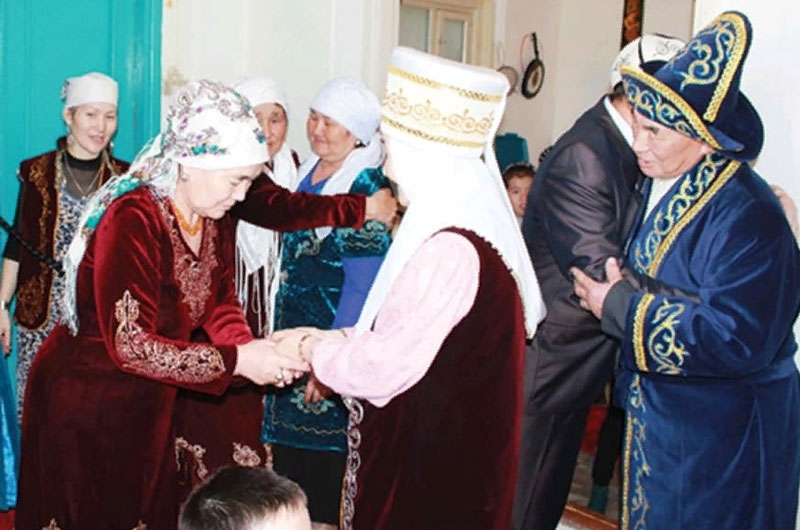
In Kazakh customs, there exists the concept of zhol-zhoralgy (ceremonial path). This refers to the exchange of gifts, presents, and offerings corresponding to each person's labor, ancestry, and kinship ties. They are performed in various ways. For example, there is a specific protocol for receiving distinguished guests arriving for the first time — batyrs, akyns, elders, and matchmakers. Their companions are not left unattended either. Such gifts include: a horse and chapan (robe), kise belbeu (belt), saddle and harness, weapons, carpet, beaver hat, dombra, and silver whip. Signs of respect are also shown by yielding precedence, for example: giving blessings, showing honors, and offering the seat of honor. During the cradle ceremony (besik), the right is given to the matchmaker or women of another clan. A young akyn yields to a senior akyn, a young wrestler to the chief wrestler, a young man to a girl, because there is a saying "a girl's path is narrow." Youth yields to elders. Improper, impolite acts are called by Kazakhs "zholsyz is" (pathless deed). In general, a Kazakh person never takes a step anywhere or in any matter without zhol-zhoralgy. Daily interactions — yielding the way, observing ceremonies, following proper etiquette — everything begins precisely with this path.

"A kerchief may not be a fur coat, but it serves as zhol (a gift)," said the Kazakh ancestors: "Whether senior or junior — know how to show respect; whether cheap or expensive — know how to show the proper way." "Oh God, if you trip me at the knee, do not trip me at the tongue; if I fall from my horse, do not topple me from my path!" — prayed the people who considered falling from one's path a disgrace and never strayed from it. Once, the famous sal (singer-improviser) Sharke from Arka was in a feud with Shyngys-tore. On one occasion, Shyngys rode into the aul of the poor Sharke with a group of nukers to humiliate him. When Sharke-sal was about to slaughter his only racehorse for the feast, Shyngys ran up and said: "Don't slaughter it!" — and asked for forgiveness. Sharke-sal replied: "If I slaughter it, the horse dies; if I don't, Sharke dies" — and slaughtered the horse. This is a great example of courage — not falling from one's path. Kazakhs considered falling from the path equal to death. Zhol-zhoralgy is an edifying custom that tests the civic dignity of every person and the national dignity of the people. Thus, all everyday traditions and life customs are carried out and find their order through zhol-zhoralgy. The ability to hold one's path is the firm foundation of high morality and national wisdom.